Tag Archives: Italy

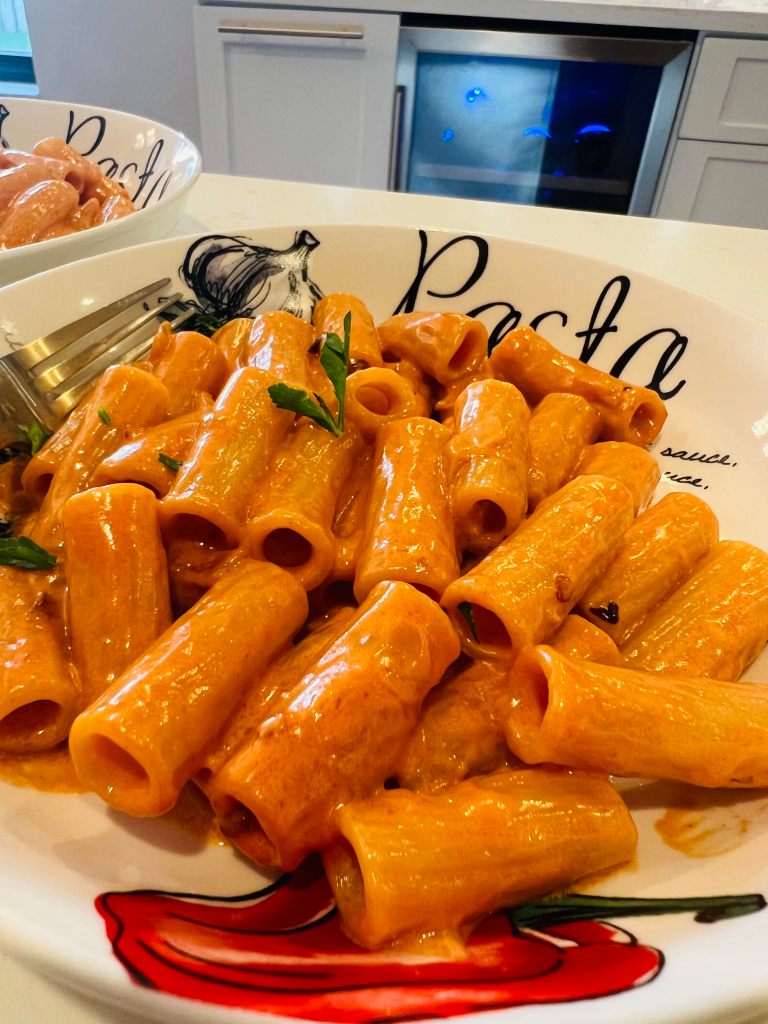
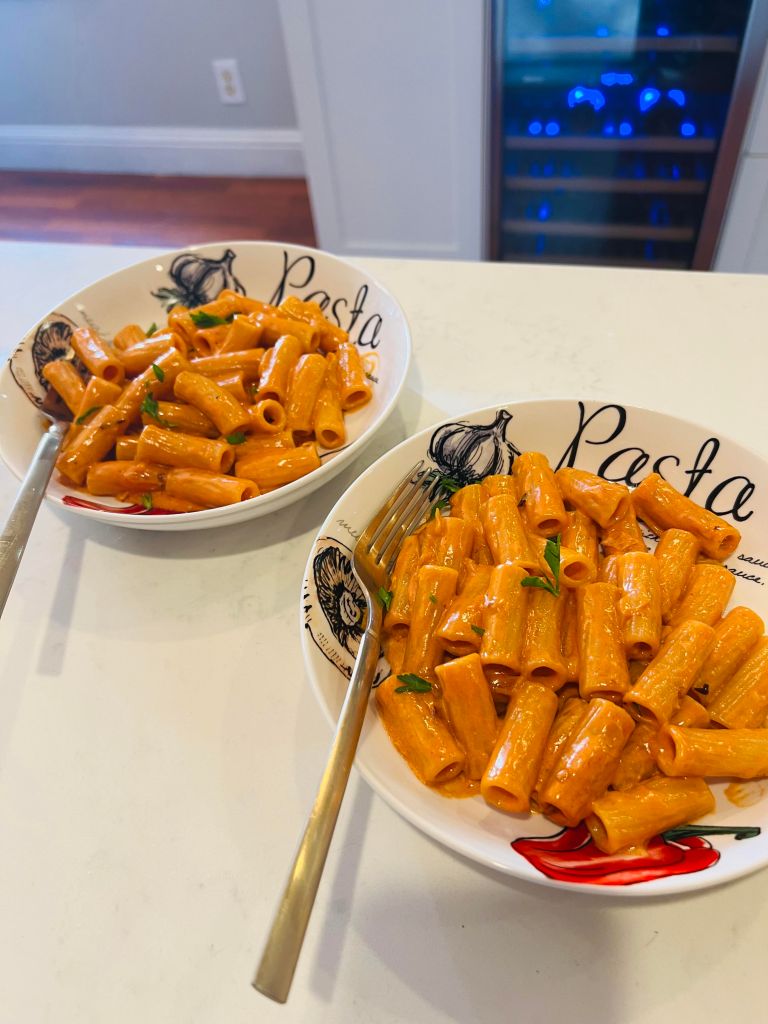
Spicy Rigatoni alla Vodka

Happy New Year 2025 to all my subscribers. Kicking off the New Year on a spicy note. Today, I am sharing my Spicy Rigatoni alla Vodka. It is silky on the palate and sexier than Puttanesca. I crafted this recipe to replicate the famous dish from Carbone Fine Food. I recently had the original at their Miami location, and I was blown away. Mine is even better. 😀 You might ask why? It’s simple, I made it and I know what I put in it. 

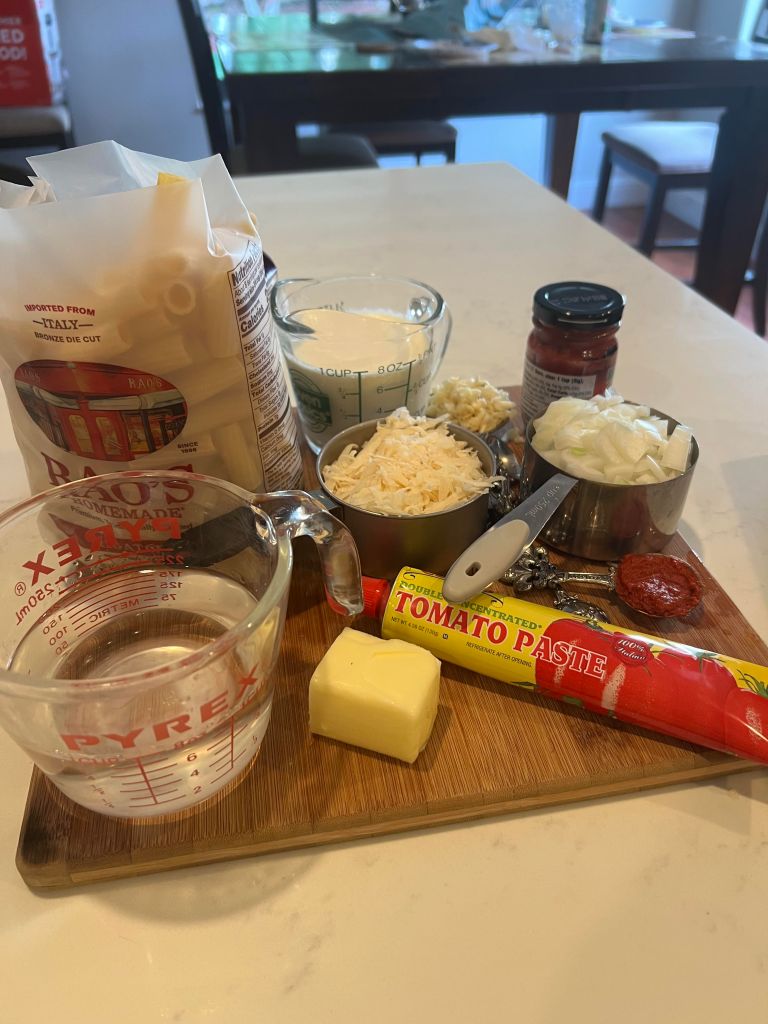
 Ingredients: 

1 lb. Rigatoni

1 handful of salt for pasta water 

2-3 tbs. olive oil for frying 

1 hipping cup of chopped onions 

 1 hipping tbs. of garlic, chopped 

 1 tsp. Calabrian chili paste 

4 ounces tomato paste 

 1 cup vodka 

 2 cups heavy cream 

Salt to taste 

 3 tbs. butter 

 1/2 – 3/4 cup of Parmigiano Reggiano cheese, grated Parsley or basil for garnish, optional  

Preparation: 

 1. Bring pasta water to a boil. Add 1 handful of salt. Cook the pasta al dente. 

 2. In the meantime, in a large skillet on medium-high heat, heat the olive oil. Sauté the onions 2-3 minutes or until caramelized. Add garlic and chili pepper paste. Stir well. Add tomato paste, stir until it obtains a rust color. 

 3. Deglaze with the Vodka, lower the flame to medium. Reduce the sauce for 1-2 minutes. Lower the flame to low. Add the heavy cream and salt. Cook for 3-4 minutes. Stir well. 

 4. Drain the pasta. Pour it in the sauce. Swirl in the butter and sprinkle the cheese. Mix well. Serve at once. The pasta should be glistening.  

Gina’s notes: if you don’t consume alcohol, alternatively, you can use some reserved pasta water instead of Vodka. 

If you can’t find Calabrian chili paste, use Thai red curry paste along with some crushed red chili pepper. Use your judgement. 

While I love using reserved pasta water, I didn’t feel like I needed it. The ratio of sauce was perfect for one pound of pasta cooked al dente. 

Wine pairing ideas: Demi-Sec champagne, full bodied Sangiovese-based Rosato or a Pinot Nero. 

I hope you will give this famous dish a try. Until then, Have a wonderful New Year from my kitchen to yours.

Gina Martino Zarcadoolas
Food & Wine Blogger, Sommelier Level 2 
and WSET Level 2 certified.  
Cookbook Author: Cuisines, Corkscrews & Cultures 
Italian Wine Scholar 
Salice Salentino-Italian Award Winning Wine Blog
Website: www.foodiewinelover.com
Email: gina@foodiewinelover.com

Gina’s Cookbook

Cuisines, Corkscrews & Cultures features 88+ recipes from global cuisines, plus more than 160 tidbits, tips, headnotes, Gina’s notes, and wine pairing suggestions. This cookbook is packed with valuable content for the beginner cook to the most advanced. Explore Gina’s kitchen for some delicious meals; let her share with you her knowledge of food & wine and cultures of the world. You will discover a rustic side to her personality, with a touch of glamour!

Her cookbook is available on Amazon.com in the US and many parts of the world. If you would like an autographed copy, please contact her at gina@foodiewinelover.com. The signed copy will be shipped from her US address.

CCC-Cookbook-Cover-FrontJpeg
Cuisines, Corkscrews & Cultures

Testimonials:

“Gina not only offers a wide variety of delicious salads, but her salad recipes are a wonderful way to start a meal. One of my favorite salads Gina makes is tabouleh. It is so easy to make and such a lovely recipe. All of Gina’s salads are made with love and fresh seasonal ingredients.” – Chef Krystina Kalapothakos, http://www.kouzounaskitchen.com Author of the cookbook Back to My Roots

“My dear Gina, I give you a 5 star and more for this dish. This is everything that started my passion for cooking, and I am so very glad you did this post. A true authentic dish from Naples which gladly is where my Nonno was born and raised. The simplicity of this dish speaks volumes! My favorite dish of all-time is Spaghetti al Pomodoro con Basilico. You are amazing and completely fed my soul to see this. Yes, the recipe must be in your cookbook that I am so excited about. Love this and you.” – Natasha Panacci, http://www.cookingwithtash.com

“Gina, I would give anything to have a taste of your Greek-Style Shrimp Saganaki! So delicious! All my senses would love to try this amazing dish. Your food has so much soul, story, and passion! Your fresh pasta looks superb! You are a superstar, Gina! Good food, good wine, good atmosphere. I see it all shining through your pictures and your captions.” – Camila Hurst, http://www.piesandtacos.com

“I love that each recipe has the history and story for it. This helps set the context for why you would want to make each recipe. Gina’s diverse knowledge of foods from around the world along with her knowledge of wines makes enjoyment of each meal more complete. Some favourites of mine are Greek Goddess salad with its deep roots in an ancient Mediterranean culture. The picture an setting are lovely and make you want to dive right in. A really unusual recipe for me was “A Kissable Kibbeh to Caress your Palate” with a great picture of her mother making this unique recipe. It is helpful to have notes about what to do if you cannot find certain ingredients so that you can still enjoy the recipe and make it.
Great job Gina. Highly recommended.” Cathy Connally – Cookbook Author – Canada

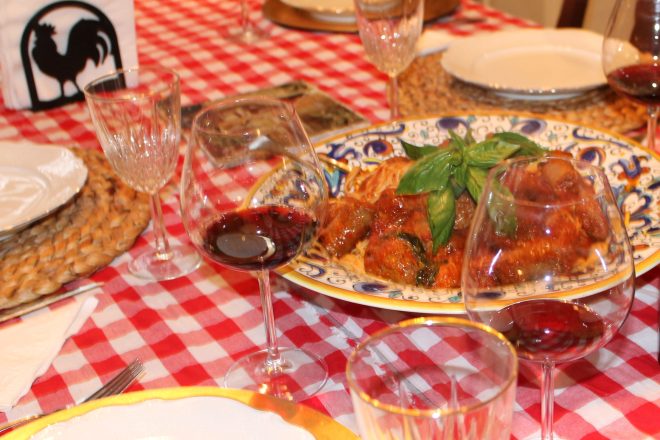
Braised Short Ribs in Tomato Sauce

Braised Short Ribs in Tomato sauce

Braised Short Ribs in Tomato sauce

Braised Short Ribs in Tomato Sauce

Braised Short Ribs in Tomato Sauce

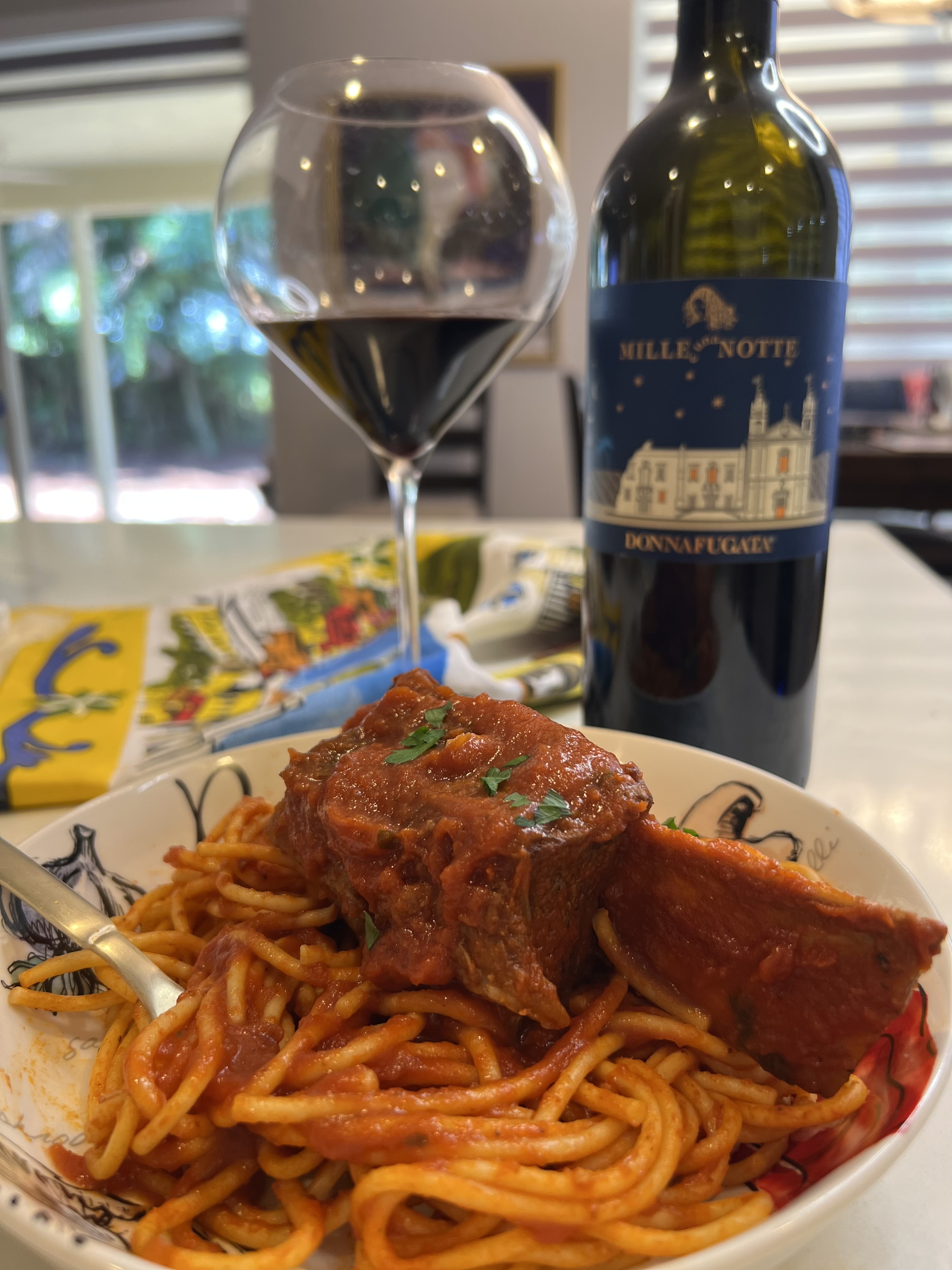
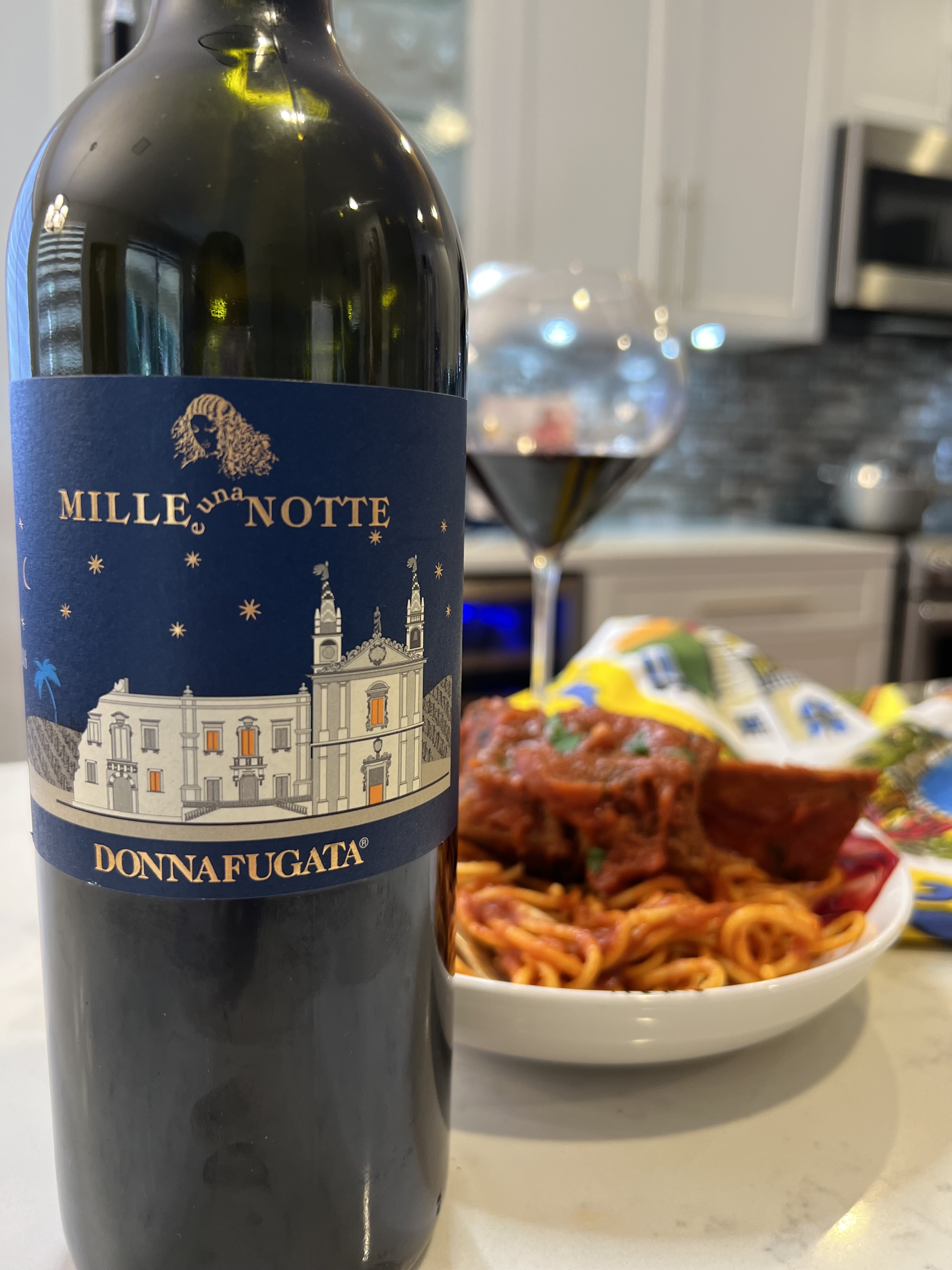
It’s been raining here, and I needed some comfort food to cheer me up. I made braised short ribs simmered in a tomato sauce and paired them with a Nero d’Avola. It is the flagship grape of Sicily. Mille e Una Notte translates to A Thousand and One Night and comprises predominantly of Nero d’Avola. This wine boasts violet hues and shows great concentration. The nose delivers aromas of dark fruits, blackberry, plum, savory and sweet spices, and a hint of earthiness. The mouthfeel is silky and mirrors the nose with additional flavors of dark chocolate, baking spices, hints of black pepper, nutmeg, and licorice. The finish is lingering, and this wine has the potential for long cellaring. Below is the recipe for the short ribs.

Braised Short Ribs in Tomato Sauce

Ingredients:

6 short ribs (about 3 lbs.)
salt and freshly ground pepper, to taste
olive oil for frying
5-6 garlic cloves, chopped
1/2 cup dry red wine
1 (32) oz prepared plain tomato sauce
1/4 cup water
1 (26.46) Pomi strained tomatoes
Flat leaf parsley, plus more for garnish
1 lb. spaghetti or any pasta of your choice
1 handful of salt for the pasta water
Parmigiano Reggiano

Preparation:

Preheat the oven to 350-degree Fahrenheit.

1. In the meantime, liberally season the short ribs with salt & pepper. In a Deutch oven on medium-high heat, heat 2-3 tbs. olive oil, sear 3 short ribs for about 2-3 minutes on each side. Remove. Sear the second batch. Remove and set aside.
2. In the same pan, add more oil if needed, sauté the garlic for 1-2 minutes, and deglaze with the wine for 1-2-minutes. Add in the tomatoes, water, parsley, and ribs. Bring to a gentle boil and turn off the burner. Cover.
3. Place the pan in the preheated oven for about 1 hour or until the meat is tender.
4. While the short ribs are cooking, bring the pasta water to a boil, and add a handful of salt. Cook according to package directions or al dente.
5. Serve with grated Parmigiano Reggiano or local Parmesan cheese.

Cook’s Note regarding Italian traditions: if you want to eat like the Italians, serve the pasta first, followed by the short ribs. Here in the US, we tend to serve them on the same plate.

While the wine and the dish were delicious on their own, a brown sauce would have made a better pairing with this outstanding wine. The acidity in the tomato sauce overpowered the wine and mellowed its flavors. Either way, the food and the wine were both super stars, but they didn’t get long together.

I hope you will give this recipe a try! I recommend this wine for a special occasion and stick with a Sangiovese-based red wine for an ideal pairing.

Happy Cooking & Sipping from Gina’s Kitchen!
Gina Martino Zarcadoolas, aka Foodiewinelover
Culinary Personality, Food & Wine Blogger
Author of the cookbook: Cuisines, Corkscrews & Cultures
Level-2 Certified world-renowned – “WSET: Wine, Spirit, Education, Trust”
Level-2 Certified Sommelier & Italian Wine Scholar Student (Unit 1 completed)
Winner of 2019 Italian Wines “Salice Salentino USA Bloggers” Award, held in Puglia, Italy
Brand Strategist

Ca’ del Baio, a Piece of Heaven in Barbaresco

I finally had the opportunity to travel to Piedmont (Piemonte) this past June, and experienced the beauty of this picturesque Italian region. I visited many lush wineries in the sub-regions of La Morra, Barolo, Alba, and Barbaresco, and tasted some delicious wines. Barbaresco is a beautiful region in northwestern Italy where the Nebbiolo grape thrives in the slightly maritime climate: warmer, dryer, and milder, allowing the grapes to ripen faster. The Nebbiolo grapes are used to produce the wine that also goes by the name of Barbaresco. It is characterized by its rich flavors with notes of spices and mild perfumes with sweetness and is considered elegant and refined. The soil in Barbaresco has more nutrients and makes it less tannic than Barolo. Barbaresco is also known for Dolcetto and Barbera. 

Upon arriving at Ca’ del Baio── house of the bay horse, means a dark-horse in Piedmontese dialect, which is an inspiration for their logo──Federica greeted us with her contagious smile in her work attire. We knew it was going to be a special tour and felt a deep connection with the winery.  For four generations Ca’ del Baio has been a family affair, as is the tradition in the Langhe region. Nurtured and passed down from father to son, the vineyards surrounding the Grasso family farmhouse have been added to over time through marriage and acquisitions. 

Giulio and Luciana along with their daughters Paola, Valentina and Federica, handle all the various aspects of the business. They do it with passion and expertise, from the growing and vinification of the grapes to hospitality and wine sales. For the Grasso family, simplicity, a sense of sacrifice and the deep attachment they have to their land are pre-requisites for guaranteeing wines of quality. Today the Ca’ del Baio estate takes in 28 hectares of vineyards in the villages of Barbaresco and Treiso, both of which are in the Barbaresco winegrowing area.

All estate-grown, their wines are made from a range of highly valued varieties, some typical of the area while others are more international: the whites include Moscato, Chardonnay and Riesling, and the reds Nebbiolo, Barbera and Dolcetto. Almost all the wines are varietals. The most prestigious vines – producing the Nebbiolo used to make Barbaresco – are between 25 and 40 years old, and they go into making the estate’s crus of Asili and Pora (commune of Barbaresco) and Vallegrande and Marcarini (Treiso). 

Since we were on a tight schedule, I did not have time to write my own wine descriptions, therefore, I am using the winemaker’s notes that I found on their website: Ca del Baio. I enjoyed this wine tasting tour that was conducted by Federica. She’s passionate and very knowledgeable in the world of wines. I highly recommend  you make reservations ahead of time before visiting this charming boutique winery. 

Recently, Ca’ del Baio’s Barbaresco Vallegrande 2016 received the prestigious “Tre Bicchieri”( 3 glasses), Italy’s Best Wines award given by Gambero Rosso. It’s the largest food-E-Wine Publishing House in Europe, according to their Instagram profile. 

Enjoying a tasting at Ca' del Baio

Enjoying a tasting at Ca’ del Baio

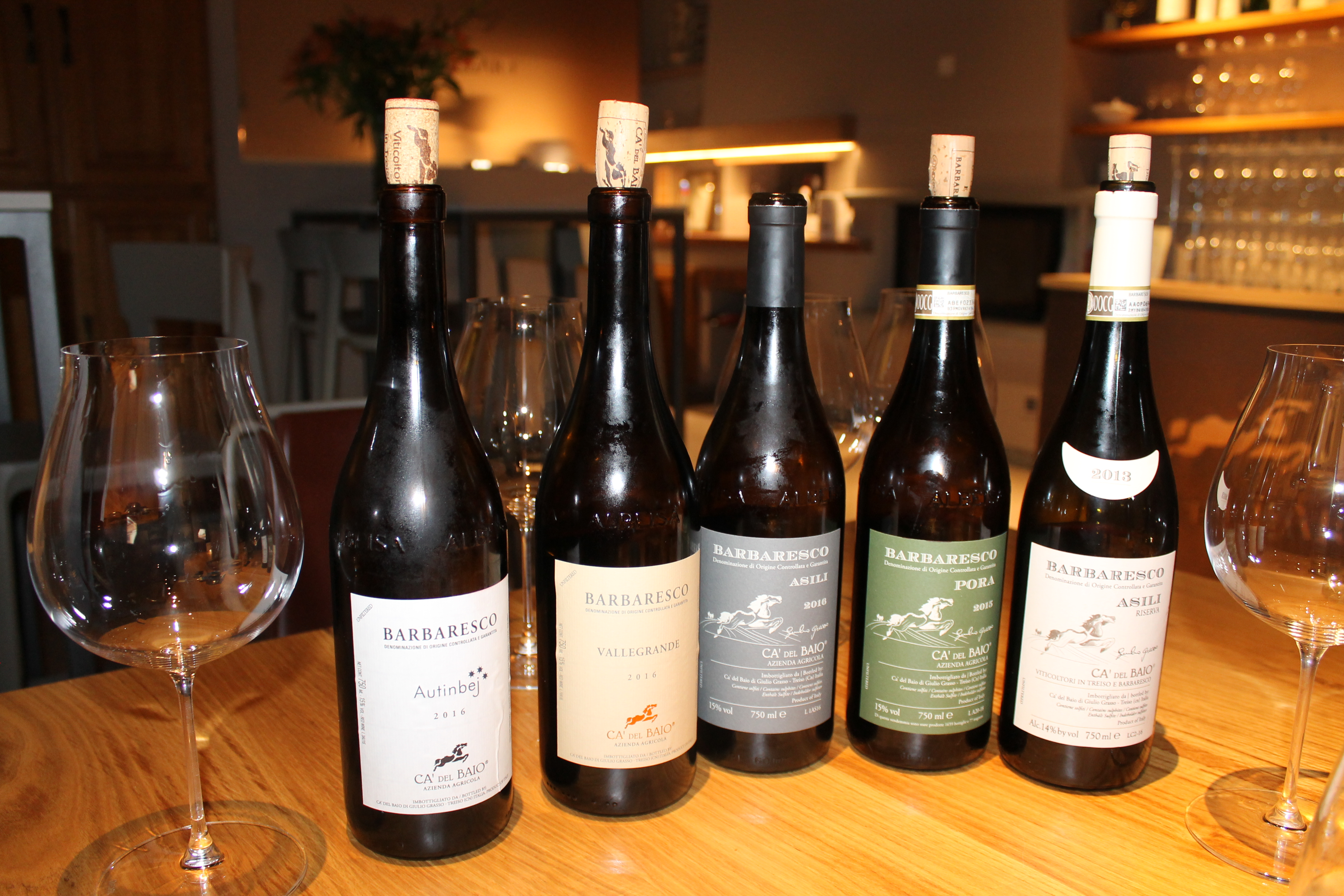
Ca' del Baio 2013 Barbaresco Asili Riserva

Ca’ del Baio 2013 Barbaresco Asili Riserva


Winemaker’s notes: The wine displays a brilliant garnet red colour with shades of orange. The intense nose releases hints of lavender, pine, rose petals, aromatic herbs, spices, and goudron (tar) notes. The wine is dry, full-bodied, and warm. It is exceptionally smooth and velvety in the mouth.


Ca del Baio 2015 Barbaresco Pora

Ca’ del Baio 2015 Barbaresco Pora


Winemaker’s notes: colour bright garnet red; nose intense and complex, with fruity overtones conjuring up plums and blackberries, and spicy hints of vanilla and roasted hazelnuts; taste full-bodied, soft and tannic; a big, yet very flavorsome wine.

Ca del Baio Barbaresco Asili 2016

Ca’ del Baio 2016 Barbaresco Asili


Winemaker’s notes: color bright garnet red, with slight orange tinges; nose intense, with fruity aromas of marasca cherries and hints of violets. Spicy notes of black pepper, liquorice and goudron (tar); taste dry, warm and soft, showing a long, rich, smooth flavour.

Award-winning Ca del Baio 2016 Barbaresco Vallegrande

Award-winning Ca’ del Baio 2016 Barbaresco Vallegrande


Winemaker’s notes: colour garnet red; nose intense, with powerful fruit, dried flowers and underbrush; taste dry, smooth and rounded, ending in a warm finish with nicely-balanced tannins.

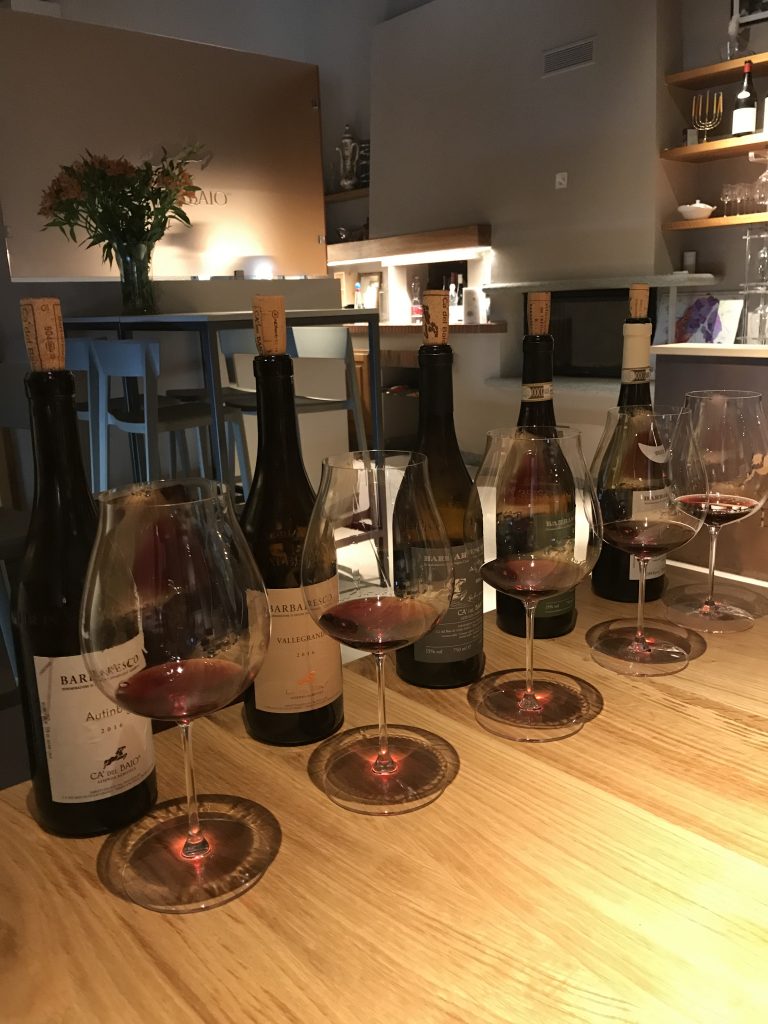
Ca del Baio Barbaresco Lineup

Ca’ del Baio Barbaresco Lineup

Ca' del Baio 2016 Barbaresco Autinbej

Ca’ del Baio 2016 Barbaresco Autinbej

Winemaker’s notes: the colour is a deep garnet red with reflections of old pink. The nose is an intense, fruity aroma reminiscent of raspberries, jam, and violets that give an ethereal feeling accompanied by sweet spicy notes and hints of cocoa. In the mouth, Autinbej is warm, long, persistent and slightly tannic with an aftertaste of fruity notes.

LCa del Baio Langhe Chardonnay

Ca’ del Baio Langhe Chardonnay

Winemaker’s notes: colour bright straw yellow; nose intense and complex, ranging from flowery to fruity, with hints of nuts; taste dry, full-bodied and well-balanced, with long flavour…Chardonnay, international by nature, Piedmontese at heart.

Barbaresco wine region 

Amazing Barbaresco lineup 

While touring, Federica's dad Giulio brought me a glass of Moscato to taste

While touring, Federica’s dad Giulio brought me a glass of Moscato d’Asti to taste

I captured a picture of Ca' del Baio family portrait - Original is not mine

I captured a picture of the Grasso’s family portrait – Original is not mine

Ca' del Baio Barrel room

Ca’ del Baio barrel room


Ca del Baio Wine Room

Ca’ del Baio wine storage room

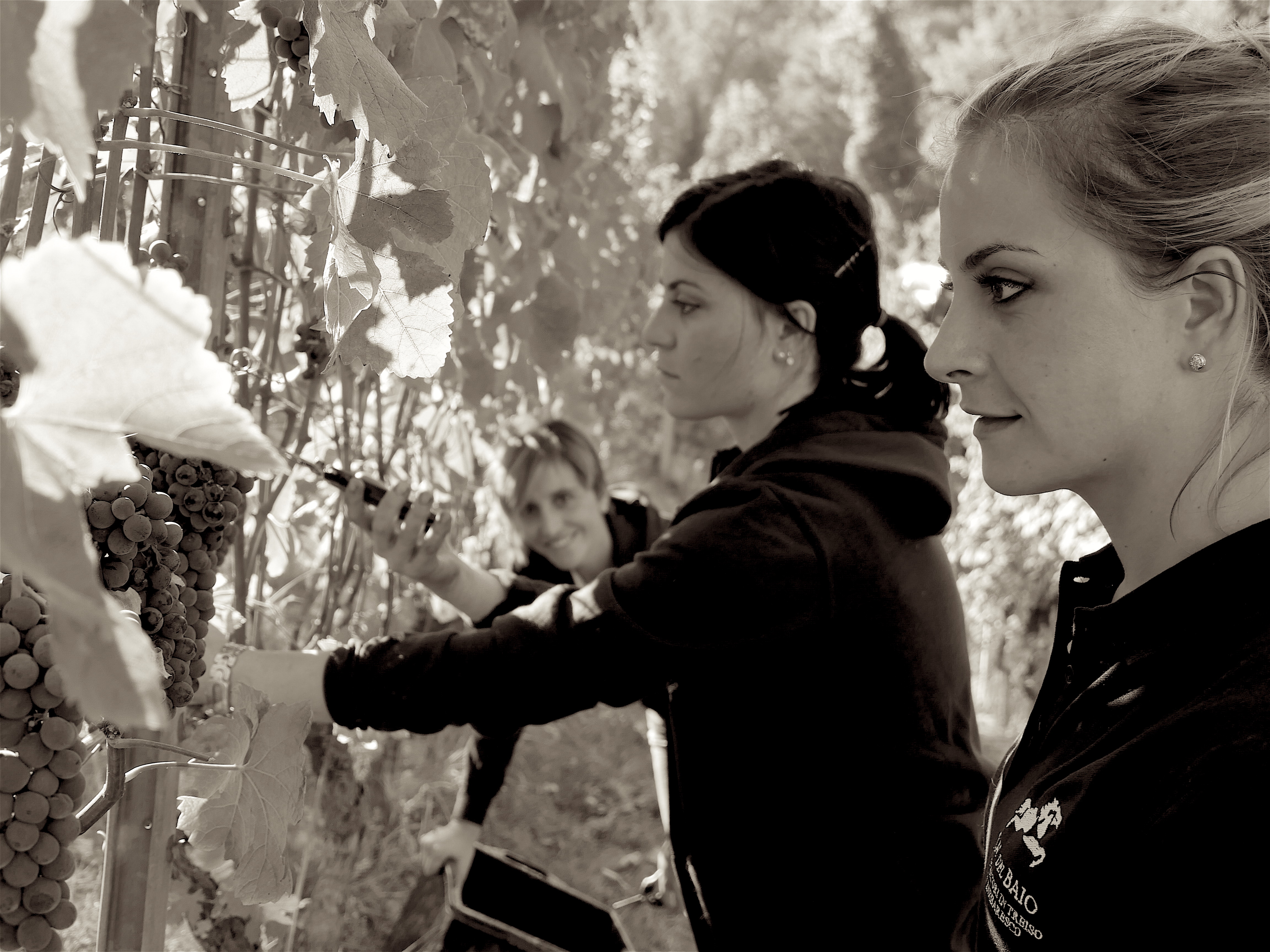
Ca del Baio sisters

Ca’ del Baio – the 3 sisters – photo from their website – not mine


The Grasso family symbolizes respect for land and passion for wine. They take pride in their work and harmoniously carry on the family’s legacy.  I am so glad that I met this tight-knit family and made unforgettable wine memories. 

 I hope you have enjoyed this article that illustrates our wine tasting journey in Piedmont, Italy. 

“Il vino fa buon sangue”  = Good wine makes good blood
“In vino veritas”  = In wine there is truth
 
Photos taken by Gina for Foodiewinelover – unless otherwise stated. All rights reserved. 
Disclosure: some of the information was taken from Ca’ del Baio’s website.   

Happy Sipping! 
Gina Martino Zarcadoolas, aka Foodiewinelover
Culinary Personality, Food & Wine Blogger
Author of the cookbook: Cuisines, Corkscrews & Cultures
Winner of 2019 “Salice Salentino Bloggers Award”
Level-2 Certified world-renowned – “WSET: Wine, Spirit, Education, Trust”
Level-2 Certified Sommelier

To obtain a signed copy of my cookbook: https://atomic-temporary-72612853.wpcomstaging.com/product/cookbook/
It’s also available on Amazon Italy, Spain, Great Britain, France, Japan, Australia, and more.


Pasta alla Norma

Pasta alla Norma

Pasta alla Norma

Barbera D'Alba

Barbera D’Alba

Pasta alla Norma originated in Sicily and is perfect for a small gathering. It is believed to be named after the famous opera called Norma. It’s easy and made with a few ingredients including my favorite veggie: eggplant! In this recipe, I am using whole canned tomatoes but you can use fresh tomatoes if they are in season. This is a great meal for vegetarians depending on their diet lifestyles (with or without the cheese). I served a salad with the pasta and my family ate to their heart’s content. Put on your apron and follow me in the kitchen.

Level of difficulty: Easy to intermediate

Serves 6-8 as a main meal

Ingredients:
• 1 medium eggplant, chopped in medium size
• ¼ – ½ cup of olive oil
• 3 garlic cloves, chopped
• 1 – (28) ounce can whole San Marzano tomatoes
• 1 teaspoon salt
• 5-6 basil leaves cut in chiffonade, plus more for garnish
• ¼ cup pasta water, as needed
• Ricotta Salata cheese, for garnish
• 1-pound penne, rigatoni or spaghetti

Preparation:

1. In a medium-sized saucepan, on medium-high heat, heat up oil, sauté the garlic, 1-2 minutes, add the eggplant, cook while stirring for 5-7 minutes. Adjust the heat as necessary. Add the tomatoes, salt, basil. Lower the heat and simmer for 15-20 minutes covered with lid tilted. Stir occasionally.  If the sauce is too thick, add water toward the end. (before draining the pasta). Turn the burner off.

2. While the sauce is cooking, bring pasta water to a boil. Add salt and cook al dente. You will be doing a little juggling.

3. Add drained pasta to the sauce and mix well. Serve in a large pasta bowl. Garnish with the cheese and basil.

I paired this meal with a lovely aged Barbera D’Alba from Ca’ Viola winery and it worked magically.

Other wine pairing suggestions: Nero d’Avola, a red grape variety from Sicily or any medium-bodied red wine of your choice.

Happy Cooking from Gina’s Kitchen to Yours,

Gina Martino Zarcadoolas, aka Foodiewinelover
Culinary Personality, Food & Wine Blogger
Author of the cookbook: Cuisines, Corkscrews & Cultures
Level-2 Certified world-renowned – “WSET: Wine, Spirit, Education, Trust”
Level-2 Certified Sommelier

Discover the Splendor of Salento and its Signature Italian Wines

Puglia has become one of the hottest spots in Italy where people flock to the beach to bask in the hot sun, enjoy the local wines, and partake in the Italian culinary traditions. This region is known for its wine production, cultivation of tomatoes and artichokes, and is a major producer of olive oil.  It’s also known for its famous “cucina povera” which translates to poor cuisine because the people use simple, seasonal, and high-quality ingredients.  Orecchiette—Italian for “little ears”— a regional pasta shape, fava beans, eggplant, and an abundance of fresh seafood are part of their diet. The Puglian cuisine and the wines produced in this area intertwined nicely.

As a result of my infinite love affair with Italian wines, I have tasted hundreds of them in classes, seminars, festivals, and private gatherings. If you are a wine enthusiast like me, you would be constantly exploring grape varieties from different Italian regions.

In this article, I will focus on Salice Salentino DOC wines from the Salento area. They deserve to be recognized for their richness and signature taste. Their production is still in its infancy stage unlike the wines from other major Italian regions like Piedmont and Tuscany.

Facts and history:
The Salento Peninsula in the region of Puglia is in the southernmost part of the boot known as the heel. It is bordered by the Adriatic and Ionian Seas with a sunny dry climate. The soil is fertile and the wines tend to be high in alcohol. This is due to the lack of rain in the area which creates a challenge for winemakers to craft attractive wines. The Salento area is renowned for its beautiful landscape, exquisite regional cuisine,
sun-baked vineyards, luscious wines,  and cultural diversity.

In the 1930s, the farmers would combine the Negroamaro grape, known for its earthy bitterness with the Malvasia Nera to add sweet character to the wine. This blend created a perfectly balanced wine. The rosé version followed soon after. Over time, the farmers continued to experiment and created new varieties of Salice Salentino, which now include: Negroamaro, Negroamaro Rosato, (rosé) Pinot Bianco (white wine), Fiano, Chardonnay, and Aleatico.

The Salice Salentino wines became so important in that region, that, in 1976, they were assigned the DOP: “Denominazione di Origine controllata –official quality label (DOC, “controlled designation of origin”.)

Salice Salentino owes its name to the town bearing the same name in the province of Lecce. This province is known for beautiful churches and baroque-style architecture. Lecce has been the main production of these wines for years, and is protected by a Consortium called: Consorzio Di Tutela Vini D.O.P. Salice Salentino. The Consortium was founded in 2003 and consist of 1,858 members, among them are winemakers, bottlers, and winegrowers.  The goal is to promote and ensure the protection of the territories, vineyards, ancient trees, and the indigenous grapes of the provinces of Lecce and Brindisi. The wines from that region are marketed and controlled by the Consortium to ensure the quality and the authenticity of the local grapes. Additionally, it was created to enhance and preserve this area for its great winemaking tradition.

The main grape is the Negroamaro, which translates to “black bitter” in Italian. This grape variety thrives on the terroir that combines clay and limestone soils. The Malvasia Nera is also a popular variety known for its aromatic qualities. Both grapes tend to be dark and intense in flavors.

Production and procedural guidelines:
For many years, the Salice Salentino wines have been made according to the requirements of their procedural guidelines. The entire process, from the grape growing to the final stage must take place in a specific area. It includes the districts of Salice Salentino, Veglie and Guagnano, in the province of Lecce, and Sandonaci, in the province of Brindisi, as well as some portions of the districts of Cellino San Marco (Lecce) and Campi Salentina (Brindisi).

Specific grapes are required for each single Salice Salentino wine.
At least 75% of Negroamaro grapes is required in the Salice Salentino Rosso (red) and the Rosato (rosé wines); whereas 90% of Negroamaro is required in the Salice Salentino Negroamaro and Negroamaro Rosato varieties. Additionally, local dark-colored grapes like the famous Malvasia Nera of Lecce or Brindisi can be used for blending as mentioned in the fifth paragraph.

In the Salentino Aleatico wine, (red) at least 85% of the Aleatico grapes is required, and can be blended with Negroamaro, Malvasia Nera or local Primitivo.

The Salice Salentino Bianco (white) is made 70% from Chardonnay grapes, if it does not have any other appellation. There are other types of Salice Salentino Bianco—Chardonnay, Fiano and Pinot Bianco which must contain at least 85% of the corresponding grapes.

There are also Spumante (sparkling wine) versions of the Salice Salentino on the market. This method involves natural fermentation without the addition of carbon dioxide. The Bianco, Rosato, Negroamaro Rosato, Pinot Bianco, Fiano and Chardonnay are generally used for this style of wine.

The Riserva (reserve) versions of Salice Salentino Rosso, Negroamaro, and Aleatico are aged for at least 24 months, including at least 6 in oak barrels.

The Dolce and Liquoroso versions of the Salice Salentino Aleatico are also produced and  make great dessert wines. The Dolce Naturale must have a finished alcohol of 15% and Liquoroso must have 18.5% which is like a fortified wine. Once produced, the wine is bottled in glass bottles that can have different sizes and corks, depending on the type of product.

Flavors and characteristics:
These Salice Salentino wines are enjoyed worldwide. The red ones are generally cherry, ruby or garnet-colored, and their shades become more intense as they age. The Riserva tends to have a brick color. The red wines are robust and full-bodied and can generally be classified as dry wines. The Rosso Riserva and Rosso Riserva Negroamaro have fragrant aromas of ripe fruits such as plums and cherries with a touch of spices. The sensory experience as perceived by sight, smell, and taste varies depending on the grape variety that has been used, and the way the wines are produced.

The Aleatico Dolce and Liquoroso Dolce varieties are predominantly sweet, dense, and are higher in alcohol.

The wines from the white grapes are straw yellow in color, refreshing, and fragrant with delicate fruit notes; while the Bianco and Fiano varieties have greenish hues.

Lastly, in the spumanti made from traditional wines, yeast notes are easily detected due to the re-fermentation process.

Food & wine pairings:
In general, meat-based recipes, and complex dishes are paired with the Salice Salentino from red grapes to stand up to the robustness of the wine. Pecorino cheese made from sheep’s milk also makes for a killer pairing. The Salice Salentino Rosato pairs nicely with salamis, less-intense dishes like chicken and pork, delicate cheeses, and fragrant frittatas.
The Salice Salentino Bianco goes well with swordfish and salmon, as well as a variety of seafood dishes. The bianco variety also pairs nicely with a Caprese salad using tomatoes and extra-virgin olive oil from the local farms. Whenever possible, pairing food and wine from the same region is ideal, as they are grown in similar soil.

The Aleatico Dolce and Liquoroso Dolce varieties make great dessert wines and would pair heavenly with the popular pasticciotto. This traditional dessert is known for its a flakiness, buttery short crust filled with an exquisitely rich vanilla pastry cream. There are also chocolate and pistachio versions of the filling. This dessert is also common for breakfast.

My food & wine pairing experience:
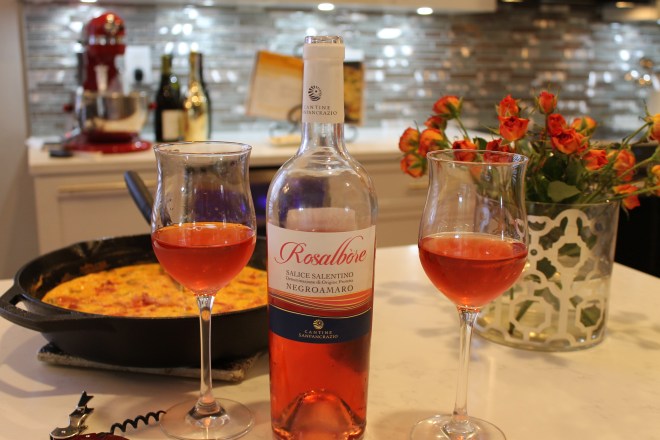
I had the pleasure of tasting the Rosalbore Salice Salentino Negroamaro Rosato DOP from Cantina Sanpancrazio, a beautiful rosé made with 100% Negroamaro grapes. The color is deep coral, (like I’ve never seen before) lightly perfumed with aromas of strawberries and gentle floral notes. The palate follows the nose, with luscious flavors of semi-ripe strawberries, and the tannins are soft. This wine is intense and well-structured with a lingering finish. The alcohol content is 13.50% by volume. The Salice Salentino Rosato represents a middle ground between the heaviness of the Rosso (red wine) and the freshness of the Bianco (white variety).
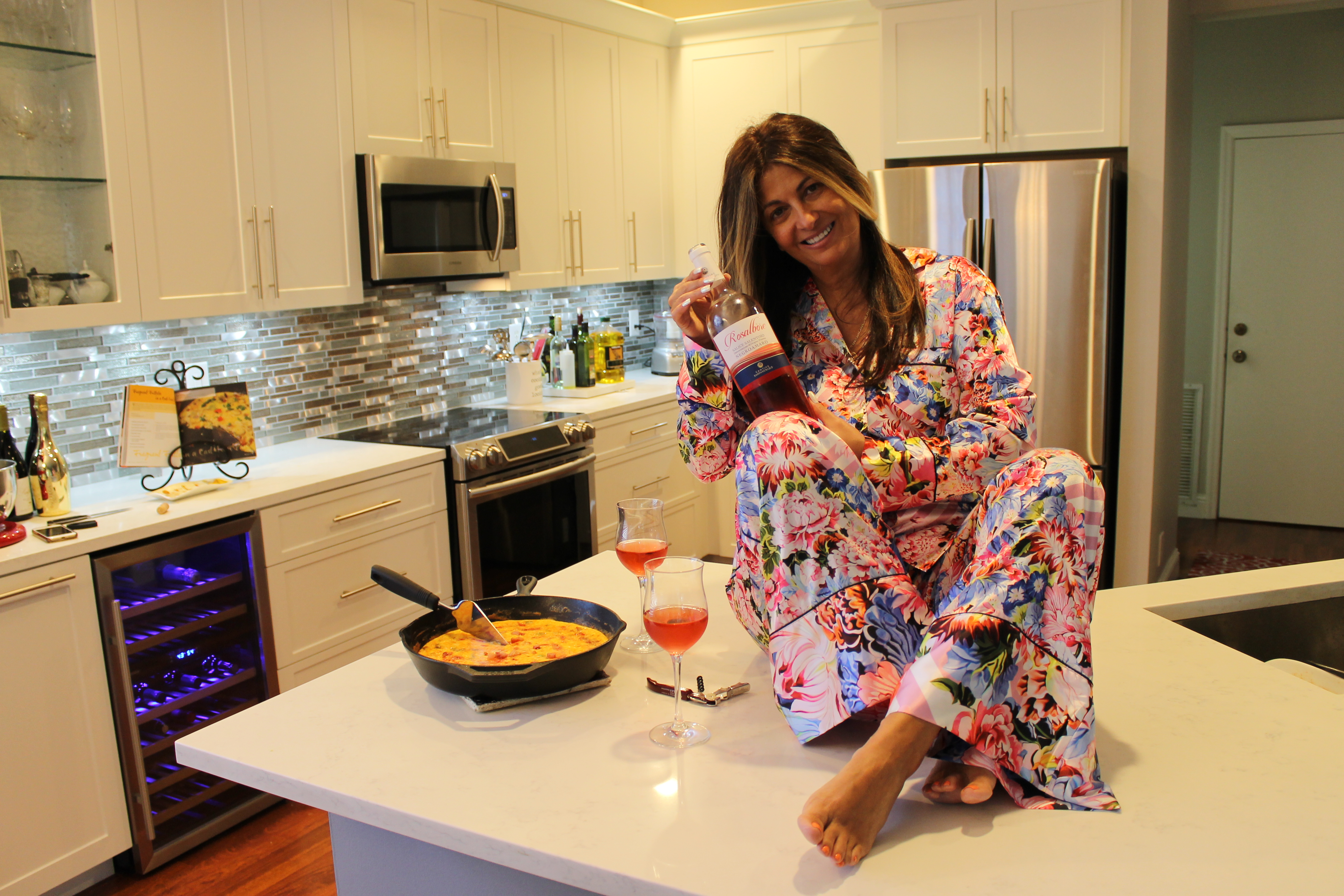
Salice Salentino Negroamaro Rosato paired with frittata

Salice Salentino Negroamaro Rosato paired with frittata

Salice Salentino Negroamaro Rosato

Salice Salentino Negroamaro Rosato

I paired this delightful rosé with a delicate frittata made with tomatoes, scallions, pancetta, and Pecorino Romano cheese. It was like the king meeting its queen (the rosé) in the quest for a beautiful romance. This food and wine combination went together harmoniously and felt like a never-ending fairytale on the palate.

I also tasted the Salice Salentino Rosso Riserva DOP from Cantine De Falco which is made with 80% Negroamaro and 20% Malvasia Nera. The color is garnet, showing fragrant spices like vanilla and nutmeg on the nose, dark cherries, and plums on the palate, with nuances of cocoa, cigar box, and oak. There is a hint of sweetness in the wine that comes from the ripeness of the fruits. The tannins are velvety, and the finish is persistent. The alcohol content is 14% by volume.

In the region of Puglia, it is common to eat horse meat, and it would make perfect sense to pair this big wine with it. However, since we do not consume this type of meat in the United States, I prepared braciole, an Italian-style gourmet beef dish that is stuffed with garlic, parsley, and prosciutto and then rolled up. They were seared on medium-high heat, then simmered for a couple of hours in a rustic-style tomato sauce. The stuffed meat and the acidity in the tomatoes were a perfect match for this majestic and full-bodied wine. This dining experience was the epitome of a beautifully balanced meal.

Salice Salentino Rosso Riserva DOP

Salice Salentino Rosso Riserva DOP

Braciole

Braciole

I hope this reportage on Salice Salentino wines has piqued your curiosity to explore this splendid Italian region and its autochthonous grapes. These wines are not only luscious, but they are affordable. This combination makes for a win-win sensory experience. Now, that I have tasted these wines, it’s time to visit Puglia. I will dream about it, until it becomes a reality.

Happy sipping from my kitchen to yours,

Update: I received the “Salice Salentino USA Bloggers Contest 2019” award/trophy for writing this blogpost.  An all-expense paid trip was included, and the ceremony was held at Rosexpo Festival on June 22nd, 2019, in Puglia, Italy.  I am excited and feel grateful to the Consortium for choosing my blogpost to represent wines from Salice Salentino. I visited this beautiful region and relished on their wines and local cuisine. I will always remember this epic moment…

Salice Salentino 2019 USA Bloggers Award

Salice Salentino 2019 USA Bloggers Award


Gina Martino Zarcadoolas, aka Foodiewinelover
Culinary Personality, Food & Wine Blogger
Author of the cookbook: Cuisines, Corkscrews & Cultures
Level-2 Certified world-renowned – “WSET: Wine, Spirit, Education, Trust”
Level-2 Certified Sommelier
Winner of 2019 “Salice Salentino USA Bloggers” Award
Recognized in Lecce, Puglia, Italy on June 22, 2019

Exclusive photos by Gina Martino Zarcadoolas
All rights reserved.

Fattoria di MonteMaggio, A Magical Boutique Winery in Tuscany

Enjoying La Dolce Vita with Ilaria at Fattoria di Montemaggio

Enjoying La Dolce Vita with Ilaria at Fattoria di Montemaggio

Ilaria is giving me a lesson on the Sangiovese grape

Ilaria is giving me a lesson on the Sangiovese grape

My husband and I recently took a spectacular trip to Italy and visited some amazing regions, rich in cultures and traditions.  One of our destinations was Tuscany and we were living our dream of “La Dolce Vita” (the sweet life). We were blown away by the beauty of the rolling hills and the lush cypress trees. Finally, all the landscape pictures we had seen were coming to life and the views were similar to that of a postcard. On the first day, we got to visit this beautiful winery called: Fattoria di Montemaggio, located in Radda in Chianti in the heart of Chianti Classico region.

It’s truly magical with a stupendous view of the valley, and well-manicured grounds. There were full-blown roses and fresh artichokes growing in the immaculate garden. Ilaria, the estate manager greeted us with a beautiful smile and gave us a tour of the vineyards. It was clear how passionate she was about her job and demonstrated a great knowledge in the viticulture and viniculture process of wine making. She gave us a little lesson about the stubborn Sangiovese grape, as I explained in an earlier post:  The temperamental Sangiovese grape variety . I pointed out to her that the ground seemed very dry and she replied: “we need to make them suffer”. Of course, she was referring to this particular grape variety.  After a tour of the vineyards and some photo snapping, it was Denis, the cellar manager, who guided the wine tasting.  We enjoyed a lovely selection of wines in the company of Riccardo, our amazing tour guide and the multi-talented Katarina Andersson. She is a translator, an educator and a wine writer at: Grapevine Adventures. The wines were luscious and of high quality which were no surprise to us, after seeing the labor of love that went into producing them. Fortunately, because of the terroir and the micro-climate, Fattoria di Montemaggio is able to grow many grape varieties such as: Sangiovese, with small additions of Merlot, Pugnitello, Chardonnay, Malvasia Nera, and Ciliegiolo.

A few months ago, I was able to get their Chianti Classico in my area and paired it with Pork Chops in Tomato sauce. It worked delightfully.  I brought back a couple of bottles from this recent trip and cannot wait to crack them open. If you intend to visit Tuscany, I highly recommend that you put Fattoria di Montemaggio on your itinerary. You will be very happy with this gem of a place.

Ilaria, the estate manager at Fattoria di Montemaggio

Ilaria, the estate manager at Fattoria di Montemaggio

The rose garden at Fattoria di MontemaggioThe view at Fattoria di MontemaggioIMG_8849The views at Fattoria di Montemaggio

I hope you have enjoyed my blog post on this beautiful winery and the enchanting photographs that I captured during my visit. My wish for you is to have the opportunity to visit this lovely place and bask under the Tuscan Sun.

Happy Travels!

Gina Martino Zarcadoolas, Foodiewinelover
My Food, Wine & Travel Lifestyles
Level-2 -World renowned – “WSET: Wine, Spirit, Education, Trust
Level-2 Certified Sommelier
Culinary Personality, Cookbook Author and Lover of Global Cuisines

Photos by Gina Martino Zarcadoolas for Foodiewinelover
and by Katarina Andersson – Wine Writer

Fattoria di Montemaggio

Fattoria di Montemaggio


The Temperamental Sangiovese Grape Variety

Chianti Classico Sangiovese

In 2009, I attended wine classes at the United States Sommelier Association, and passed a written and blind wine taste tests. I earned a Level 2 Sommelier certificate.  In February 2017,  I decided to pursue my wine studies, and attended  classes  at WSET, a world-renowned school, which stands for Wine, Spirit Education Trust. I received a Level 2 certificate and passed with merit.  I don’t consider myself a sommelier, and I don’t use that word to describe what I do.  I prefer to save it for someone who is actively working in the wine industry.  Sommelier is a French word that means a wine steward who’s trained and knowledgable in wines. I am not into fancy wine descriptions, but I can tell you one thing, after drinking and sipping hundreds of wines, I know if a wine is compatible with my palate or not.  By now, my taste buds know exactly what I like.  I prefer Old World wines, full-bodied, earthy with deep ruby colors, and flavor profiles that include aromatic spices, cloves, black peppers, nutmeg, hints of dark chocolate, vanilla, tobacco, leather, barnyard, licorice with a lingering finish. I usually go for a complex wine, with layers of flavors for special occasions.  At times, I also enjoy medium-bodied wines, and New World wines with floral notes. There are so many grape varietals, (varieties)  from so many regions of the world, however, today, I will focus on the Sangiovese grape. It is a very difficult grape to grow because it needs warm weather, and for that reason, vintages can vary from one season to the next. It is considered one of the most widely planted red grape in all of Italy. The Sangiovese grape does particularly well in the terroir of beautiful Tuscany. However, it is a temperamental grape, that requires a lot of attention. It is not easy to keep it balanced, because of its high acidity content. It is harvested late, because the ripening process is slow. Tannins can also be rough. Sangiovese is also blended with Cabernet Sauvignon, Merlot and other grapes to make one of my favorite blends called “Super Tuscan”. In June 2017, I finally visited Tuscany, and some amazing wineries in that region. I enjoyed some delicious wines made with the Sangiovese grape.

My tasting notes on Tenuta di Renieri:  It is a blend made with mostly Sangiovese, and is from the enchanting region of Chianti. It has the Chianti Classico label, which is a highly rated, small wine-region with a DOCG designation, (Denominazione di Origine Controllata e Garantita is the highest designation in Italian wines. The wines must be evaluated by a tasting committee before they can be bottled, to assure the highest quality standards.) This wine shows unique characteristics, and bottles from that region have the seal of a black rooster to distinguish them. It’s a beautifully balanced wine with alluring nose of nutmeg spice, bursting with flavors of lush cherries, with a long finish that keeps you begging for more.

Marchese Antinori Chianti Classico Riserva 2006

Marchese Antinori, Chianti Classico, Riserva 2006. It’s an excellent wine, very complex with an everlasting finish.

Winemaker’s Notes:

“92 points Antonio Galloni (Wine Advocate): …positively sparkles on the palate. Dark wild cherries, minerals, graphite, violets and spices are just some of the nuances that flow effortlessly… The French oak contributes an additional measure of volume and ampleness I doubt the wine truly needs given the superlative quality of the fruit in 2006. A rich fabric of minerals reappears to frame the intense, deeply satisfying finish… The 2006 is one of the finest vintages I can remember tasting. (Oct 2010)”

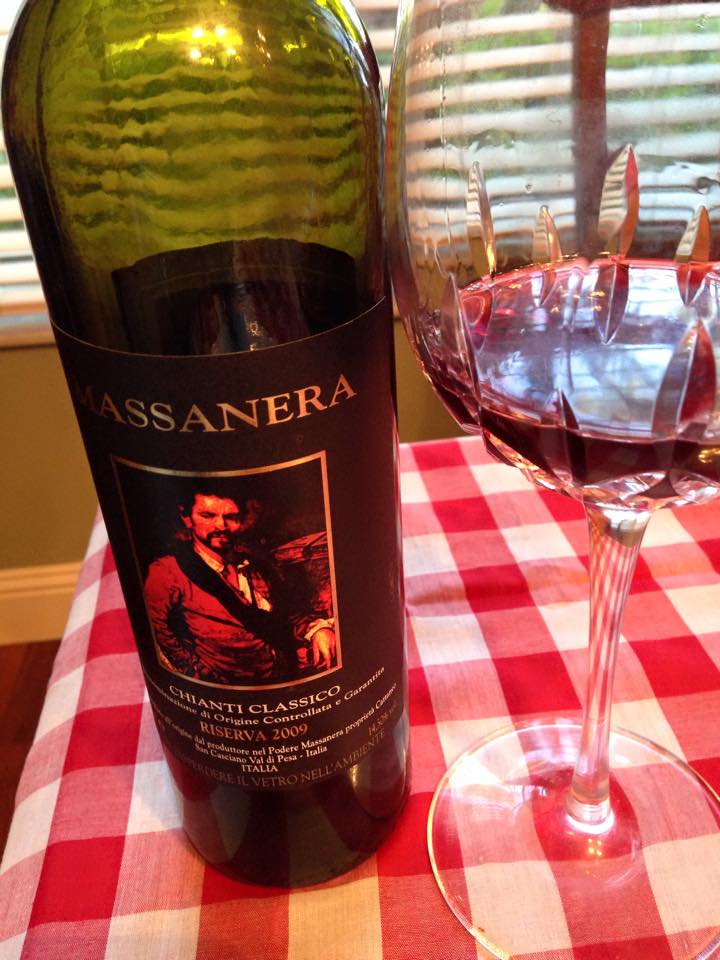
Massarena, Chianti Classico Riserva 2009

Distinctive flavors of cherry, a superb wine for that special occasion. Pairs nicely with a tomato-sauce based dish.

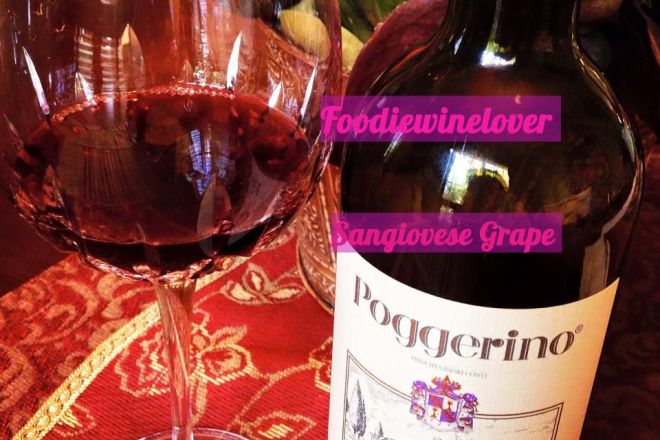
Poggerino Vendemmia Chianti Classico 2011

Lovely wine, with flavors of plum, with hints of vanilla, medium-bodied, made with 100% Sangiovese grape

I hope you will pull yourself together, and pour yourself a Sangiovese! I would love to hear your experience with this wine variety. If you are not too familiar with Italian wines, just visit a large chain store, and get the help of a wine clerk. Many of them are highly trained and very knowledgeable. What I like the most about buying wine in large chain stores, if you are NOT happy with a wine, you can return it, and they will gladly refund your money, or give you a store credit. Don’t get me wrong, I also love to support the small boutique shops, as they carry some very unique wines. Just get out there, and start exploring the world of wines. There are so many of them, and so little time!

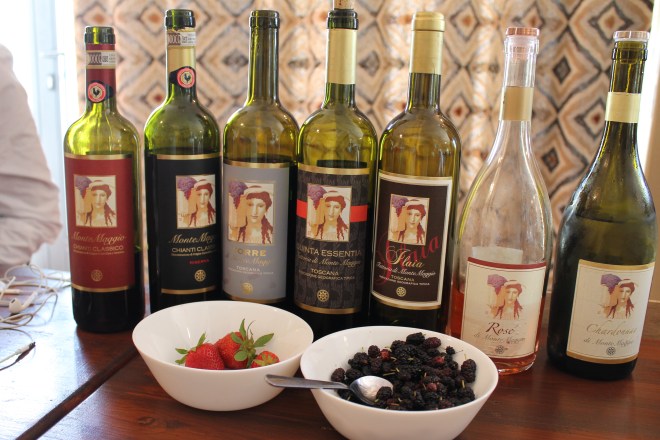
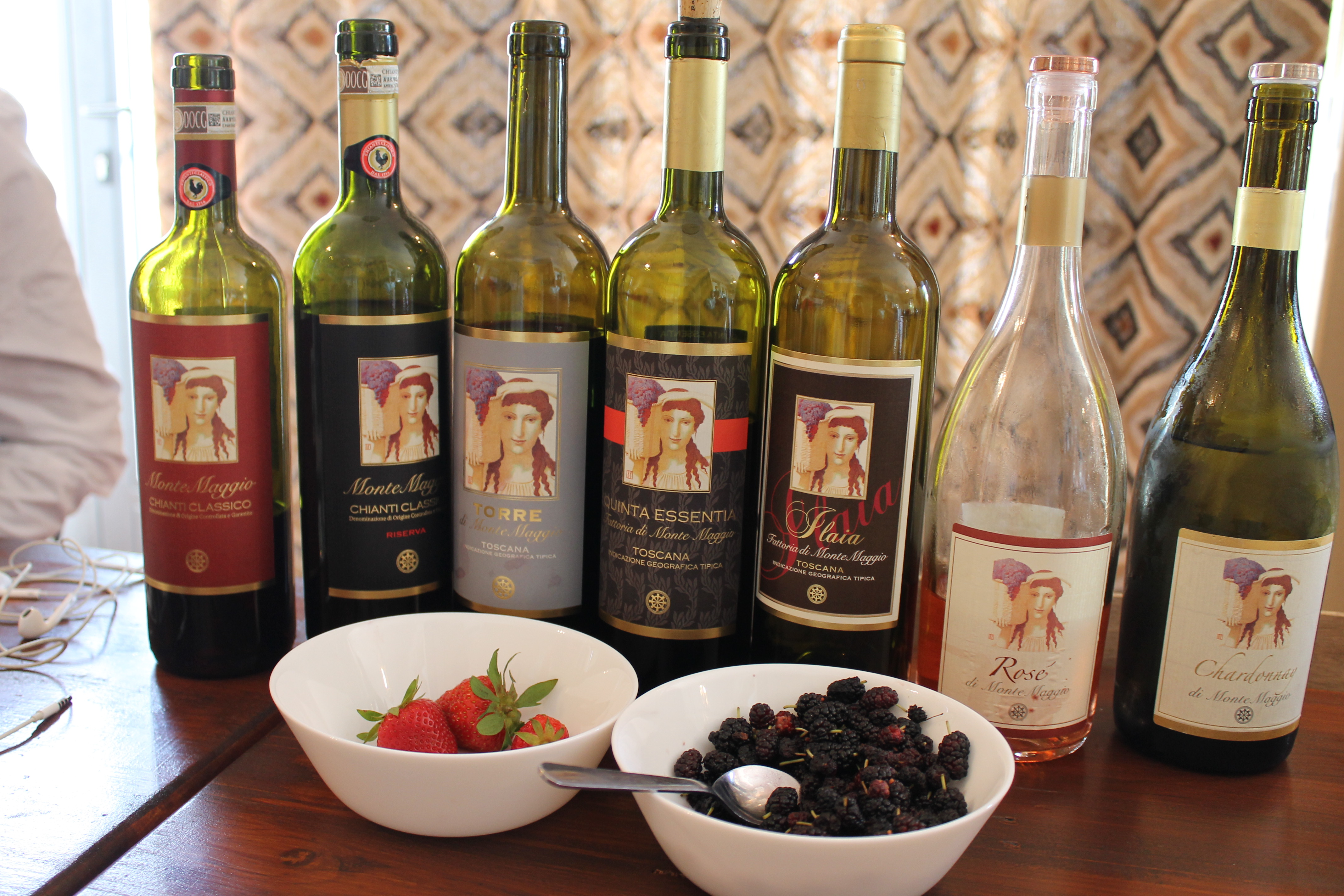
Vertical wine tasting at the magical Fattoria di Montemaggio in Tuscany

Vertical wine tasting at the magical Fattoria di Montemaggio in Tuscany

Above is a picture of a vertical wine tasting at the magical Fattoria di Montemaggio in Tuscany. They are a boutique winery and produce high-quality wines.

Hope you enjoyed this blogpost! Happy Sipping!

Gina Martino Zarcadoolas, Foodiewinelover
My Food, Wine & Travel Lifestyles
World renowned – WSET (Wine, Spirit, Education, Trust)
Level-2 Certified Wine Connoisseur.
Culinary Aficionado & Lover of Global Cuisines & Travels

Photos by Gina Martino Zarcadoolas for Foodiewinelover
except for the grape photos in which the proper credit was given.


Sangiovese Grape

Image courtesy Colombaia in Chianti


The Temperamental Sangiovese Grape Varietal

Chianti Classico Sangiovese

In 2009, I attended wine classes at the United States Sommelier Association, and passed a written and blind wine taste tests. I earned a Level 2 Sommelier certificate.  In February 2017,  I decided to pursue my wine studies, and attended  classes  at WSET, a world-renowned school, which stands for Wine, Spirit Education Trust. I received a Level 2 certificate and passed with merit.  I don’t consider myself a sommelier, and I don’t use that word to describe what I do.  I prefer to save it for someone who is actively working in the wine industry.  Sommelier is a French word that means a wine steward who’s trained and knowledgable in wines. I am not into fancy wine descriptions, but I can tell you one thing, after drinking and sipping hundreds of wines, I know if a wine is compatible with my palate or not.  By now, my taste buds know exactly what I like.  I prefer Old World wines, full-bodied, earthy with deep ruby colors, and flavor profiles that include aromatic spices, cloves, black peppers, nutmeg, hints of dark chocolate, vanilla, tobacco, leather, barnyard, licorice with a lingering finish. I usually go for a complex wine, with layers of flavors for special occasions.  At times, I also enjoy medium-bodied wines, and New World wines with floral notes. There are so many grape varietals, (varieties)  from so many regions of the world, however, today, I will focus on the Sangiovese grape. It is a very difficult grape to grow because it needs warm weather, and for that reason, vintages can vary from one season to the next. It is considered one of the most widely planted red grape in all of Italy. The Sangiovese grape does particularly well in the terroir of beautiful Tuscany. However, it is a temperamental grape, that requires a lot of attention. It is not easy to keep it balanced, because of its high acidity content. It is harvested late, because the ripening process is slow. Tannins can also be rough. Sangiovese is also blended with Cabernet Sauvignon, Merlot and other grapes to make one of my favorite blends called “Super Tuscan”. In June 2017, I finally visited Tuscany, and some amazing wineries in that region. I enjoyed some delicious wines made with the Sangiovese grape.

My tasting notes on Tenuta di Renieri:  It is a blend made with mostly Sangiovese, and is from the enchanting region of Chianti. It has the Chianti Classico label, which is a highly rated, small wine-region with a DOCG designation, (Denominazione di Origine Controllata e Garantita is the highest designation in Italian wines. The wines must be evaluated by a tasting committee before they can be bottled, to assure the highest quality standards.) This wine shows unique characteristics, and bottles from that region have the seal of a black rooster to distinguish them. It’s a beautifully balanced wine with alluring nose of nutmeg spice, bursting with flavors of lush cherries, with a long finish that keeps you begging for more.

Marchese Antinori Chianti Classico Riserva 2006

Marchese Antinori, Chianti Classico, Riserva 2006. It’s an excellent wine, very complex with an everlasting finish.

Winemaker’s Notes:

“92 points Antonio Galloni (Wine Advocate): …positively sparkles on the palate. Dark wild cherries, minerals, graphite, violets and spices are just some of the nuances that flow effortlessly… The French oak contributes an additional measure of volume and ampleness I doubt the wine truly needs given the superlative quality of the fruit in 2006. A rich fabric of minerals reappears to frame the intense, deeply satisfying finish… The 2006 is one of the finest vintages I can remember tasting. (Oct 2010)”

Massarena, Chianti Classico Riserva 2009

Distinctive flavors of cherry, a superb wine for that special occasion. Pairs nicely with a tomato-sauce based dish.

Poggerino Vendemmia Chianti Classico 2011

Lovely wine, with flavors of plum, with hints of vanilla, medium-bodied, made with 100% Sangiovese grape

I hope you will pull yourself together, and pour yourself a Sangiovese! I would love to hear your experience with this wine varietal. If you are not too familiar with Italian wines, just visit a large chain store, and get the help of a wine clerk. Many of them are highly trained and very knowledgeable. What I like the most about buying wine in large chain stores, if you are NOT happy with a wine, you can return it, and they will gladly refund your money, or give you a store credit. Don’t get me wrong, I also love to support the small boutique shops, as they carry some very unique wines. Just get out there, and start exploring the world of wines. There are so many of them, and so little time!

Fattoria di Montemaggio

Vertical wine tasting at the magical Fattoria di Montemaggio in Tuscany

Above is a picture of a vertical wine tasting at the magical Fattoria di Montemaggio in Tuscany. They are a boutique winery and produce high-quality wines.

Hope you enjoyed this blogpost! Happy Sipping!

Gina Martino Zarcadoolas, Foodiewinelover
My Food, Wine & Travel Lifestyles
World renowned – WSET (Wine, Spirit, Education, Trust)
Level-2 Certified Wine Connoisseur.
Culinary Aficionado & Lover of Global Cuisines & Travels

Photos by Gina Martino Zarcadoolas for Foodiewinelover
except for the grape photos in which the proper credit was given.


Sangiovese Grape

Image courtesy Colombaia in Chianti


Caprese Salad

CapreseSaladFoodiewinelover
In 2007, my family and I embarked on an amazing Italian trip, and one of the itineraries was Capri. It is a breathtaking island, and we took a ferry from the bay of Naples to get there.  We visited the famous Blue Grotto, ate some regional cuisine, and took a tour of the island. I must admit, I was very scared going up the mountains on the tour bus, but it  was a travel experience that I will never forget. Today, I am sharing with you an easy and delicious dish, the Caprese Salad.

It’s been in the 90’s already in South Florida, and I couldn’t think of a more refreshing salad, called Insalata Caprese, in Italian.  It literally means Capri Salad because it originated in that magnificent island. In Italy, it is usually served as an antipasto, and made with fresh mozzarella, tomato, and basil. The colors represent the Italian flag. My son recently brought me home a basil plant, and I already had some beefsteak tomatoes, and leftover Mozzarella that I recently used in my Chicken Parmigiana. I always have extra virgin olive oil, and balsamic vinegar readily available. I was on the go, and needed a quick-lunch, and this salad hit the spot. It was a great way to reminisce about our trip. (We were there again in 2008, but that’s another blogpost.)

Serves: 2 as a meal – Super easy

Ingredients:

  • 1 Beefsteak Tomato, sliced
  • Fresh Mozzarella, sliced
  • Basil leaves, for garnish
  • Drizzle of extra virgin olive oil
  • Drizzle of Balsamic vinegar, of Modena
  • Salt & Pepper to taste

Preparation:

Arrange the tomatoes and Mozzarella on a serving plate, lightly season with salt & pepper, liberally drizzle with olive oil, and some balsamic vinegar. Garnish with basil leaves.

Voila, the salad is ready to be served! It is such a beautiful culinary creation, and so easy to prepare. Make it for your guests, and I assure you, they will love it.

Happy Cooking from My Kitchen To Yours!

Gina

OLYMPUS DIGITAL CAMERA

Capri, Italy, June 2007 – Hubby and me